How to Play Phase 10: A Complete Guide
How to Play Phase 10: A Complete Guide
Contents
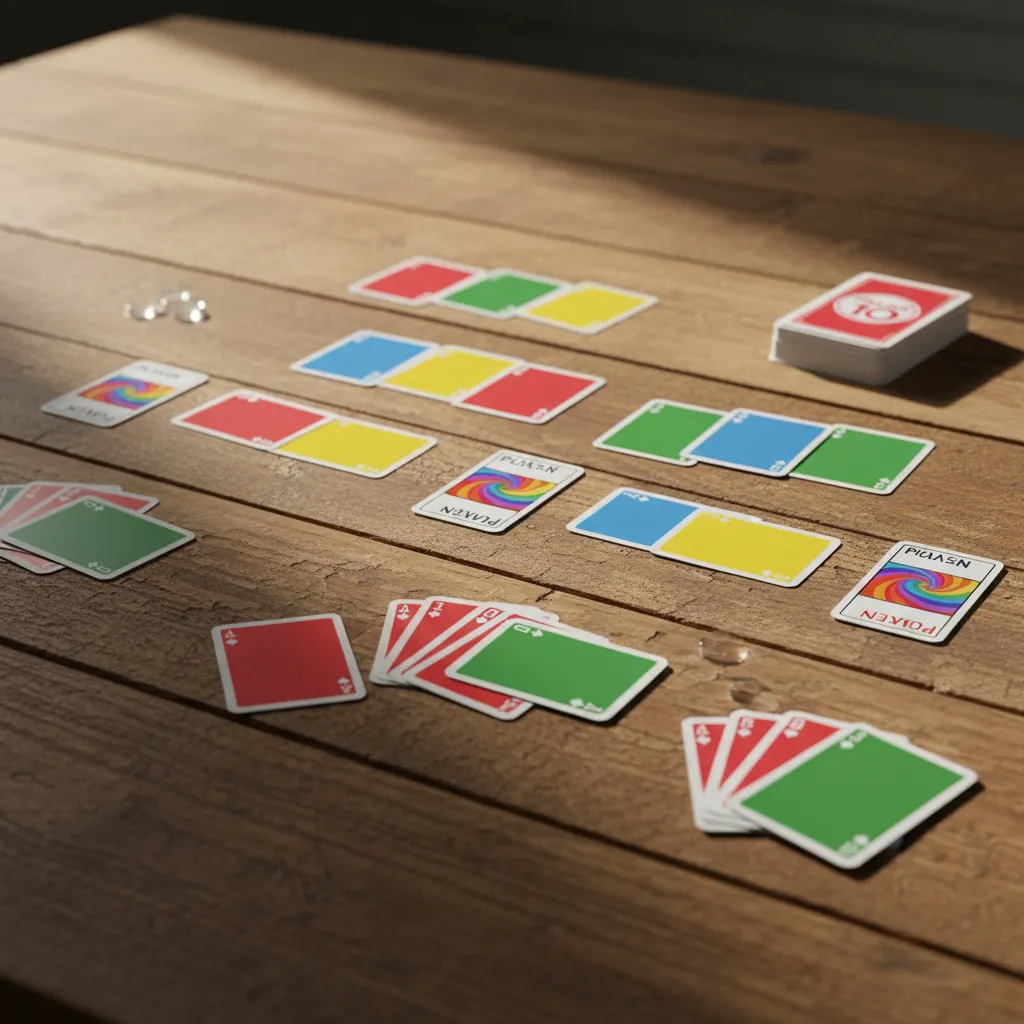
Phase 10 is a fun and strategic card game where players compete to complete 10 specific phases of card combinations. Designed for 2-6 players aged 7 and up, it combines elements of rummy and strategy. The first player to complete all phases wins, but in case of a tie, the player with the lowest score takes the victory.
What You Need
- Components:
- A Phase 10 deck (108 cards: 24 each of red, blue, yellow, and green cards numbered 1-12, 8 Wild cards, 4 Skip cards).
- Phase reference cards listing the 10 phases.
- Players: 2-6 players.
- Optional: Paper and pencil for scorekeeping.
How to Play
-
Setup:
- Choose a dealer to shuffle the deck and deal 10 cards to each player.
- Place the remaining deck face down as the draw pile. Turn the top card face up to start the discard pile.
-
Turn Sequence:
- On your turn, draw one card from the draw pile or discard pile.
- If you can complete your current phase, lay it face up on the table.
- After laying down a phase, “hit” by adding cards to existing phases (yours or others).
- Discard one card to end your turn.
-
Phases:
- Players must complete phases in order, from 1 to 10. Examples include:
- Phase 1: 2 sets of 3.
- Phase 4: 1 run of 7.
- Phase 8: 7 cards of one color.
- Players must complete phases in order, from 1 to 10. Examples include:
-
Wild and Skip Cards:
- Wild Cards: Can replace any number or color. At least one natural card must be used in a phase.
- Skip Cards: Force another player to skip their turn. Cannot be used in phases or picked up from the discard pile.
-
Going Out:
- A player “goes out” by completing their phase and discarding their last card. The round ends, and scoring begins.
How to Win
The first player to complete all 10 phases wins. If multiple players finish Phase 10 in the same round, the player with the lowest total score wins. In case of a tie, replay Phase 10 to determine the winner.
Strategy Tips
- Prioritize Completing Phases: Focus on finishing your phase before attempting to “hit” on others.
- Use Wild Cards Wisely: Save Wild cards for tricky phases like long runs or specific color requirements.
- Manage Discards: Avoid discarding cards that opponents might need.
- Monitor Opponents: Keep track of which phases others are working on to block their progress.
- Minimize Points: Discard high-value cards (10-12, Wilds, Skips) early to avoid penalty points.
FAQ
Can I skip a phase?
No, phases must be completed in order from 1 to 10.
What happens if I don’t complete my phase in a round?
You must attempt the same phase again in the next round.
Can I use multiple Wild cards in a phase?
Yes, but you must include at least one natural card in the phase.
Can I “hit” on an opponent’s phase?
Yes, you can add cards to any player’s completed phase, provided your own phase is already laid down.
What’s the difference between a set and a run?
A set consists of cards with the same number. A run is a sequence of cards in numerical order.
Comparison of Phases
| Phase | Requirement |
|---|---|
| 1 | 2 sets of 3 |
| 2 | 1 set of 3 + 1 run of 4 |
| 3 | 1 set of 4 + 1 run of 4 |
| 4 | 1 run of 7 |
| 5 | 1 run of 8 |
| 6 | 1 run of 9 |
| 7 | 2 sets of 4 |
| 8 | 7 cards of one color |
| 9 | 1 set of 5 + 1 set of 2 |
| 10 | 1 set of 5 + 1 set of 3 |
Related guides
- How to Play Blackjack
- How to Play Bridge: Rules, Setup, and Strategy
- How to Play Canasta
- How to Play Crazy Eights: Rules, Setup, and Winning Strategies
- How to Play Cribbage: Rules, Scoring, and Strategy