How to Play Chess: A Complete Beginner's Guide
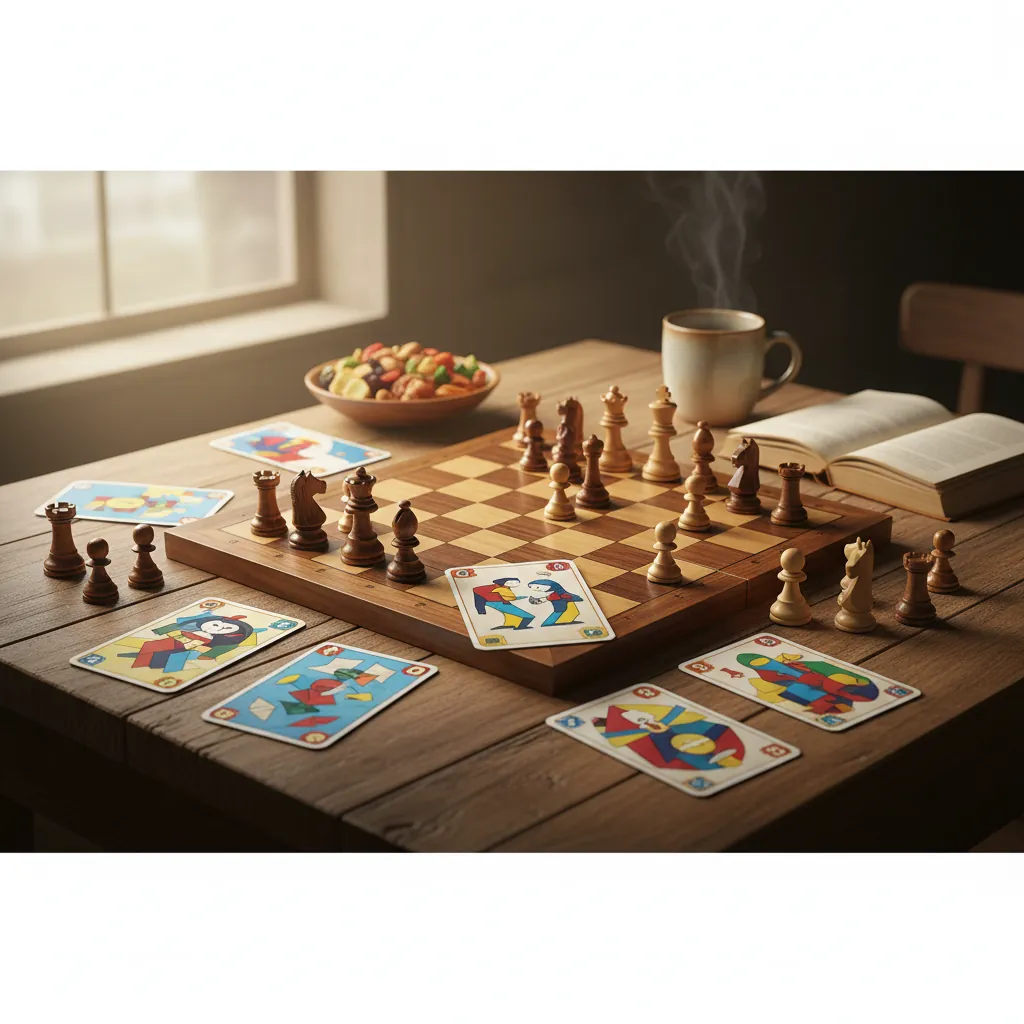
How to Play Chess: A Complete Beginner’s Guide
Contents
Chess is a strategic two-player board game played on an 8x8 grid with 16 pieces per side. The objective is to checkmate your opponent’s king by placing it under threat with no legal moves to escape. Chess is suitable for ages 6+ and can be played in casual or competitive settings.
What You Need
- Chessboard: An 8x8 grid with alternating light and dark squares.
- Chess Pieces: 16 pieces per player:
- 1 King
- 1 Queen
- 2 Rooks
- 2 Bishops
- 2 Knights
- 8 Pawns
- Players: 2 players (one controls white pieces, the other black).
How to Play
1. Set Up the Board
- Place the board so each player has a light square on the right corner.
- Arrange the pieces as follows (from left to right for white):
- Back row: Rook, Knight, Bishop, Queen, King, Bishop, Knight, Rook.
- Front row: 8 pawns.
- Black mirrors white’s setup.
2. Understand Piece Movements
- King: Moves one square in any direction.
- Queen: Moves any number of squares in any direction.
- Rook: Moves any number of squares horizontally or vertically.
- Bishop: Moves any number of squares diagonally.
- Knight: Moves in an L-shape (two squares in one direction, one square perpendicular).
- Pawn: Moves forward one square, captures diagonally. On its first move, a pawn can move two squares forward.
3. Special Moves
- Castling: Move the king two squares toward a rook, then move the rook to the square the king crossed. Conditions: Neither the king nor the rook has moved, and no pieces are between them.
- En Passant: If a pawn moves two squares forward and lands beside an opponent’s pawn, the opponent can capture it diagonally as if it moved one square.
- Promotion: When a pawn reaches the opposite end of the board, it can be promoted to any other piece (except a king).
4. Gameplay
- White moves first.
- Players alternate turns, moving one piece per turn.
- Capture opponent’s pieces by moving your piece onto their square.
5. Ending the Game
- Checkmate: The king is in check with no legal moves to escape. This ends the game.
- Stalemate: The player has no legal moves, and the king is not in check. The game ends in a draw.
How to Win
To win, trap your opponent’s king in checkmate. Focus on controlling the board, protecting your king, and strategically capturing your opponent’s pieces.
Strategy Tips
- Control the Center: Place your pieces to dominate the central squares.
- Protect the King: Keep your king safe by castling early.
- Develop Pieces: Move knights and bishops early to activate them.
- Avoid Premature Attacks: Don’t move pawns too aggressively early in the game.
- Plan Ahead: Anticipate your opponent’s moves and plan counterattacks.
FAQ
How many squares are on a chessboard?
There are 64 squares on a chessboard.
Which piece is the most powerful?
The queen is the most powerful piece due to its versatile movement.
Can a pawn move backward?
No, pawns can only move forward.
What happens if a king is left with no legal moves but is not in check?
The game ends in a stalemate (draw).
How is castling performed?
The king moves two squares toward a rook, and the rook moves to the square the king crossed.
Related guides
- How to Play Backgammon: A Complete Guide
- How to Play Checkers: Rules, Setup, and Winning Strategies (2026 Guide)
- How to Play Dominoes: Rules, Setup, and Winning Strategies
- How to Play Monopoly
- How to Play Scrabble