Checkers Rules: How to Play, Score, and Win
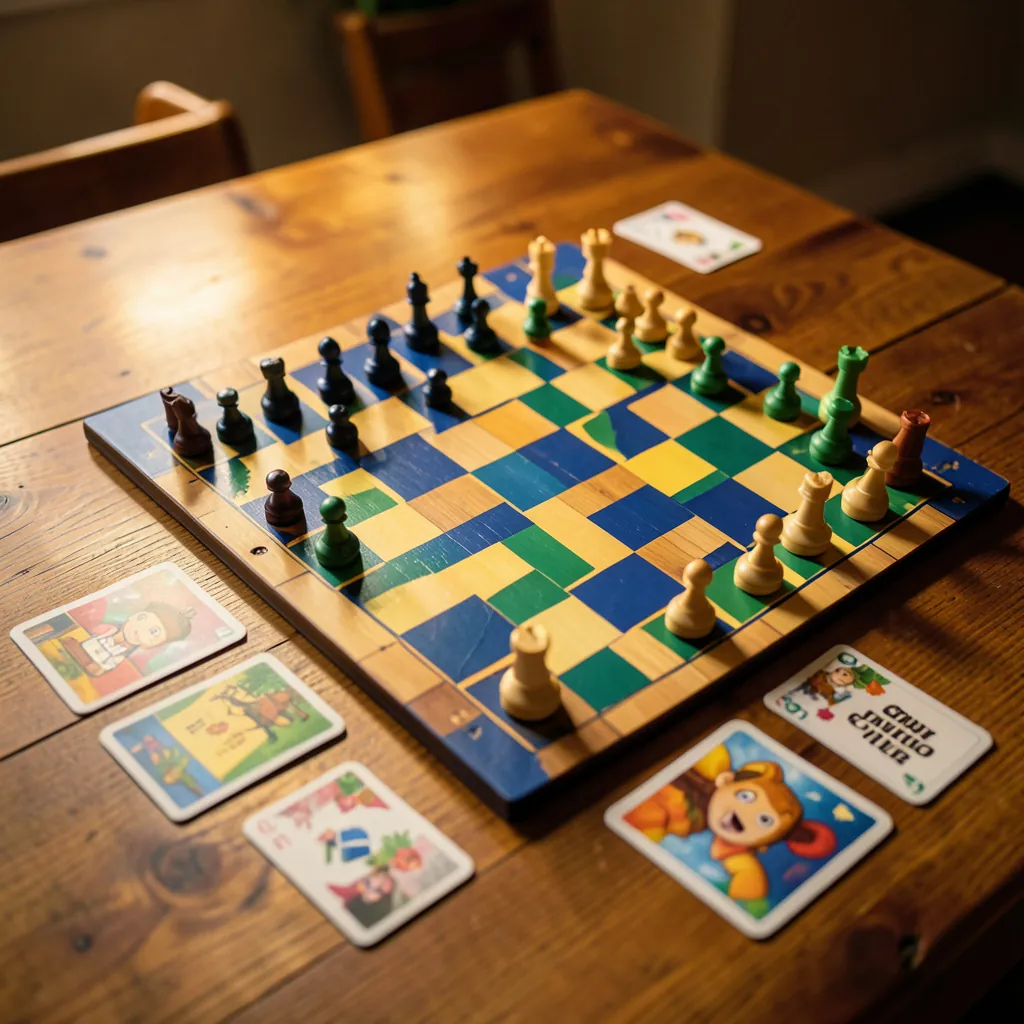
Checkers Rules: How to Play, Score, and Win
Contents
♟️ Checkers, also called draughts, is a two-player strategy board game played on a checkered board where pieces move diagonally and capture by jumping. The goal is to capture all opponent pieces or leave the opponent with no legal move. Most official rules require captures, but some variants allow optional capture or “huffing,” so check the house rules first.
Players: 2
Play Time: 10–30 minutes casual; 60 minutes–3+ hours tournament
Age: 6+
Difficulty: Easy to learn, strategically deep
Type: Strategy board game
Setup
- Use an 8×8 checkerboard for American checkers / English draughts; only the dark squares are used. International draughts uses a 10×10 board, while Canadian and Malaysian/Singaporean checkers use 12×12 boards.
- In American checkers, each player starts with 12 uniform pieces arranged on the three ranks nearest that player.
- Pieces are all “men” at the start. A king is made by placing a second checker on top of a man that reaches the farthest row.
- The player with the darker pieces — usually black — moves first, and players alternate turns.
- In the Senior Games tournament format, the initial bracket is set up randomly and the player on top of the bracket uses black; black always goes first.
How to Play
- Choose colors and start. Two players sit opposite each other. The darker color, usually black, moves first; players alternate turns. A player cannot move the opponent’s pieces.
- Move a man. On your turn, move one man one square diagonally forward to an adjacent unoccupied dark square. In American checkers, men move forward only until promoted.
- Capture by jumping. If an opponent’s piece is adjacent diagonally forward and the square immediately beyond it is vacant, jump over that piece to the vacant square and remove the captured piece from the board.
- Complete mandatory jumps. In standard American checkers and the Senior Games rules, if a jump is available, you must take it. A simple move when a jump is possible is illegal and must be retracted.
- Continue multiple jumps. If the jumping piece lands on a square from which it can jump another enemy piece, it must continue capturing in the same turn until no more captures are available. The jumping piece may zigzag and change direction between captures, but in American checkers a man captures only forward.
- Choose among alternatives. If more than one capture is available, the player may choose which piece to jump with and which direction to take in a series of jumps.
- Crown kings. When a man reaches the farthest row, it becomes a king and is crowned by placing another checker on top. The opponent is required to crown the enemy man that reaches their side. If a man reaches the king row by a jump, it must stop to be crowned and may not continue capturing as a king in the same turn.
- Move kings. In American checkers, a king may move and capture diagonally forward or backward, one square at a time; it is not a flying king. In international draughts, kings are “flying kings” and may move any number of squares forward or backward.
- Follow touch rules. If you touch one of your playable pieces, you must move it if possible. If part of a playable piece is moved over the angle of its square, the play must be completed in that direction. Touching an unplayable piece does not count as a move, and you may adjust pieces only with verbal notice.
- End the game. A player wins when the opponent has no pieces left or has no legal move.
Rule conflict: Most modern official rules require capture, and the Senior Games rules say all jumps must be completed. Some historical or house rules allow “huffing” or optional capture: the opponent may remove a piece that should have captured, compel the capture, or let the piece remain. The old American draughts laws describe this “Huff or Blow” option, so confirm which capture rule you are using before play.
Scoring
Standard checkers is not a point-scoring game. The result is a win, loss, or draw. You win by capturing all opponent pieces or by leaving the opponent with no legal move. A draw occurs when neither player can force a win; historical American draughts rules required the stronger side to complete a win or show a decided advantage within 40 of their own moves after notice, or else the game was drawn. American checkers was weakly solved in 2007: from the standard starting position, perfect play by both sides results in a draw.
The Senior Games tournament format adds time-limited scoring. It is a double-elimination tournament. Games are 12 minutes, with 1 minute between moves; losers-bracket games are 6 minutes, and championship games use the 12-minute time frame. If time expires and both players still have checkers on the board, the player with the most checkers on the board wins, with a king counting as 2 checkers. If the count is tied, play continues with black going first. In overtime, if black makes a capture, red gets one more move to make a capture; if red fails to capture on that next move, black wins. If red makes a capture in overtime when black has not made a capture, red wins. Red must make the last move in the 12-minute period even if that move goes past the 12-minute mark.
💡 Strategy Tips
- Check the capture rule before you start. Mandatory capture, optional capture, and huffing create very different games.
- Scan for forced jumps before every move. Avoid leaving a piece adjacent to an enemy piece with an empty landing square behind it.
- Plan multi-jump chains. A single piece can capture several men in one turn and may zigzag, so look beyond the first jump.
- Use kings carefully in American checkers. Kings gain backward movement and capture, but they are not flying kings; they still move one square diagonally at a time.
- Avoid common beginner mistakes: trying a simple move when a jump is available, forgetting to crown a king, and touching a piece carelessly when you do not intend to move it.
🎲 Variations
What are the main checkers and draughts variants?
| Variant | Board | Men | Kings | Capture rule notes |
|---|---|---|---|---|
| American checkers / English draughts | 8×8 | Move one square diagonally forward; capture forward only | Move and capture one square diagonally forward or backward; no flying kings | Mandatory in most official rules; Senior Games rules require all jumps to be completed |
| International draughts | 10×10 | Men can capture forwards and backwards | Flying kings: may move any number of squares forward or backward | Capture is mandatory in most international rules |
| Russian draughts | 8×8 | Men can jump forwards and backwards | Not detailed in the cited source | Not detailed in the cited source |
| Canadian / Malaysian / Singaporean checkers | 12×12 | Not detailed in the cited source | Not detailed in the cited source | Not detailed in the cited source |
| Historical American draughts “Huff or Blow” rule | American-style play | Standard men’s movement | King may move backward or forward as the board permits, but not in the same play | Opponent may huff, compel capture, or let the piece remain |
What house rules change capture?
The biggest house-rule split is whether capture is mandatory. Most official rules require you to jump when possible, and the Senior Games rules say a simple move when a jump is available is illegal and must be retracted. The historical “Huff or Blow” rule gives the opponent a choice: remove an adverse piece that should have captured, compel the capture, or let the piece remain. A huff does not count as a play.
Can more than two people play checkers?
The sources describe checkers as a two-player game. No standard 3–5 player checkers rule is given. For a group, use a bracket or rotate players between games; that is a tournament format, not a standard multiplayer rules variant.
❓ FAQ
How many players can play checkers?
Checkers is a two-player game. One player uses dark pieces and the other uses light pieces, and turns alternate.
How do you win at checkers?
You win by capturing all opponent pieces or by leaving the opponent with no legal move. In the Senior Games timed format, if time expires with pieces remaining, the player with the most checkers on the board wins, with a king counting as 2 checkers.
Is capturing mandatory in checkers?
In most official rules, yes. The Senior Games rules require all jumps to be completed, and a simple move when a jump is available is illegal. Some historical and house rules allow optional capture or “huffing,” so confirm the rule before playing.
Can you play checkers with more than two players?
The cited sources describe two-player checkers only. There is no standard 3–5 player rule in these sources; for groups, run a tournament bracket or rotate players.
Is checkers hard to learn?
Checkers is easy to learn. The basic rules are simple, the age range is commonly listed as 6+, and the game still offers deep strategy and tactics.
How long does a checkers game take?
Casual games usually last 10–30 minutes. Tournament games can last about 60 minutes to 3 hours or more. The Senior Games timed format uses 12-minute games, with 6-minute games in the losers bracket.
Related guides
- Backgammon Direction of Play: Complete How-to-Play Guide
- How to Play Backgammon: Complete Rules, Setup & Strategy Guide
- backgammon how to
- How to Play Backgammon: Complete Rules, Setup, Scoring, and Strategy
- How to Play Basic Checkers (Draughts): Rules, Setup, Strategy and Variations