Checkers Rules for Kids: How to Play, Score, and Avoid Common Mistakes
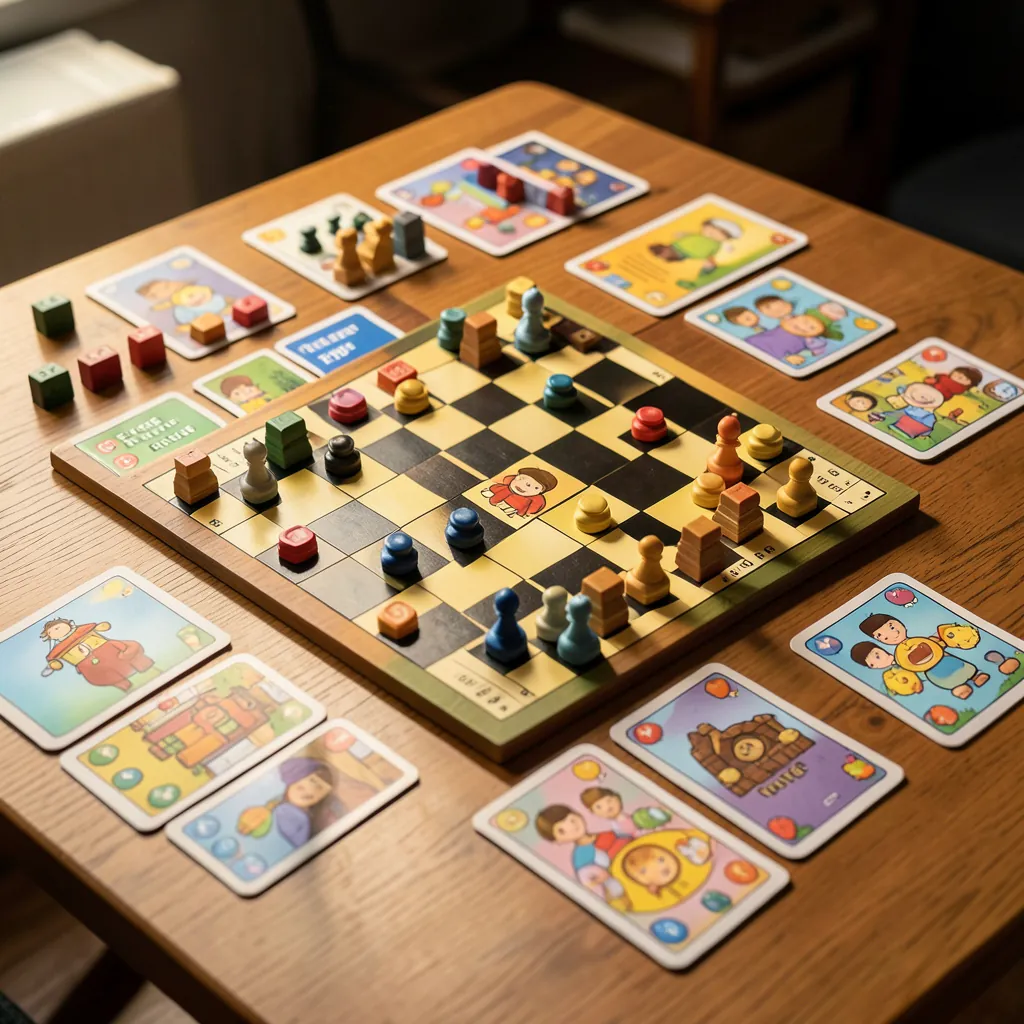
Checkers Rules for Kids: How to Play, Score, and Avoid Common Mistakes
Contents
♟️ Checkers (also called draughts) is a two-player board game played on a checkerboard with 12 pieces per player. The goal is to capture or trap all of your opponent’s pieces, or leave them unable to move. For kids, use the simpler rules below, which skip the advanced mandatory-jump rule from official play.
Players: 2
Play Time: 15–30 minutes
Age: Young children and up; one school source lists grades 4–8
Difficulty: Easy with kid rules; official play is intermediate/advanced
Type: Board game / abstract strategy
Setup
- Use an 8×8 checkerboard and 24 checkers total: 12 of one color and 12 of another. The Iowa Regents’ Center and the ERIC activity guide both list 24 checkers for two players.
- Place the board in the standard position: the bottom-left square nearest each player should be dark/black, according to Wendemuth’s 1922 standard laws.
- Each player places 12 checkers on the dark squares in the first three rows nearest them. The row closest to each player is that player’s “home row.”
- Decide who moves first. Sources conflict here: the Iowa Regents’ Center kid-focused rules say players decide who goes first, while the ERIC activity guide and Wendemuth’s standard laws say Black moves first. Agree before starting.
How to Play
- On your turn, move one checker one square diagonally forward, from one dark square to an adjacent empty dark square. Checkers stay on dark squares.
- Regular checkers move forward only, toward the other player’s home row. They do not move backward until they become kings.
- To capture, jump over an adjacent opponent checker to an empty dark square directly beyond it. Remove the jumped checker from the board. The ERIC activity guide notes that more than one checker can be captured at a time.
- If you can jump, official rules say you must jump. The Iowa Regents’ Center kid version deliberately drops this forced-jump rule because young children often miss jumps. Decide before play whether jumps are forced.
- For multiple jumps, official rules say that if you start a multiple jump, you cannot stop partway through. The Iowa Regents’ Center kid version drops this advanced rule too. Agree before play whether a player must finish a multiple jump.
- When a checker reaches the opponent’s home row, it becomes a king. Crown it by placing a second checker of the same color on top. Wendemuth’s standard laws say the opponent must crown it.
- A king may move and jump diagonally forward or backward. Sources differ in wording: the Iowa Regents’ Center says a king “may move in any direction,” while the ERIC activity guide says a king moves forward or backward one square at a time except when jumping.
- Continue taking turns until one player has captured or trapped/blocked all of the other player’s checkers, or the opponent has no legal move.
Which rules should kids use when sources disagree?
| Rule area | Kid-friendly approach | Official/standard rule | Source conflict or note |
|---|---|---|---|
| Starting player | Agree before play | Black moves first | Iowa Regents’ Center says players decide; ERIC guide and Wendemuth say Black starts |
| Forced jumps | May drop forced jumps for young children | If you can jump, you must jump | Iowa Regents’ Center drops this rule for kids; official rules require it |
| Multiple jumps | May simplify | Cannot stop partway through a multiple jump | Iowa Regents’ Center says the official rule exists but drops it for young children |
| King movement | King moves forward or backward; kid-source wording says “any direction” | King moves one square at a time forward/back except when jumping | Iowa Regents’ Center says “any direction”; ERIC guide specifies one square at a time |
| Winning | Capture or trap/block the opponent | Same basic goal | Iowa Regents’ Center and ERIC guide agree; no point scoring is given |
| Draws | For kids, agree whether to call a draw if neither can progress | Draw when neither player can force a win; stronger side must show advantage within 40 own moves | Wendemuth’s standard laws include a formal draw rule |
Scoring
- Standard kids’ checkers does not use point values. The winner is the first player to capture or trap/block all of the opponent’s checkers. The Iowa Regents’ Center says play continues until all of one player’s pieces are captured or trapped; the ERIC guide says the objective is to capture all opponent’s men or block them.
- For a match, Wendemuth’s standard laws recommend an even number of games so each player has the first move the same number of times.
- A draw can happen when neither player can force a win. Wendemuth’s standard laws say the stronger side must complete the win or show a decided advantage within 40 of their own moves; for kids, simplify this by agreeing on a draw rule before play.
💡 Strategy Tips
- Scan for jumps before you move. The Iowa Regents’ Center notes that young children often miss jumps because they do not notice them.
- Think a few moves ahead and set simple traps, as the Iowa Regents’ Center describes checkers as a game of planning and strategy.
- Balance offense and defense: try to capture the other player’s checkers while also protecting your own from capture.
- Protect your pieces by keeping them from sitting where an opponent can jump them easily.
- Remember king rules. A common beginner mistake is forgetting that a king can move backward or that a multiple jump may have to be completed under official rules.
🎲 Variations
- Simplified kid checkers: Drop the forced-jump rule and the no-stopping-mid-multiple-jump rule, as the Iowa Regents’ Center recommends for young children. It also notes that creating new checkers rules is common and encouraged.
- House rules: The ERIC guide says different nations have their own checkers rules and there are no international rules as in chess, so agree on house rules before play.
- Two-player standard: Checkers is normally a two-player game. Use one color per player. The sources do not give a standard 3+ player version.
- Six-Man-Football Checkers: A two-player variation using 6 checkers per player and a thumb tack as the football. Move forward, backward, or sideways—not diagonally. No checkers are removed; if the ball-carrying checker is jumped, the tack moves to the jumping checker. A touchdown scores 5 points, and four touchdowns make a game.
- Eight-marker puzzle: A one-row checkers-style puzzle from a math-education source; four red and four blue markers must swap positions using slides and jumps.
❓ FAQ
How many players do you need for checkers?
Two. Standard checkers is a two-player game, with 12 checkers per player.
How do you win at checkers?
Capture or trap/block all of your opponent’s checkers, or leave them with no legal move. Standard kids’ checkers does not use point scoring.
Can you play checkers with 2 players?
Yes—two players is the standard number. Each player controls one color and places 12 checkers on the dark squares.
Is checkers hard to learn for kids?
No with kid rules. The Iowa Regents’ Center says checkers can be played successfully by young children; official tournament rules such as forced jumps, touch-and-play penalties, and time limits are more advanced.
How long does a checkers game take?
About 15–30 minutes in the ERIC activity guide. Actual time varies with player experience and whether you use simplified kid rules.
Do you have to jump if you can?
Official rules say yes, and official rules also say you must finish a multiple jump. The Iowa Regents’ Center kid version drops that rule because young children often miss jumps, so decide before play which rule you are using.
Related guides
- Backgammon Direction of Play: Complete How-to-Play Guide
- How to Play Backgammon: Complete Rules, Setup & Strategy Guide
- backgammon how to
- How to Play Backgammon: Complete Rules, Setup, Scoring, and Strategy