How to Play Battleship: Classic Rules, Setup, Scoring, and Edition Variations
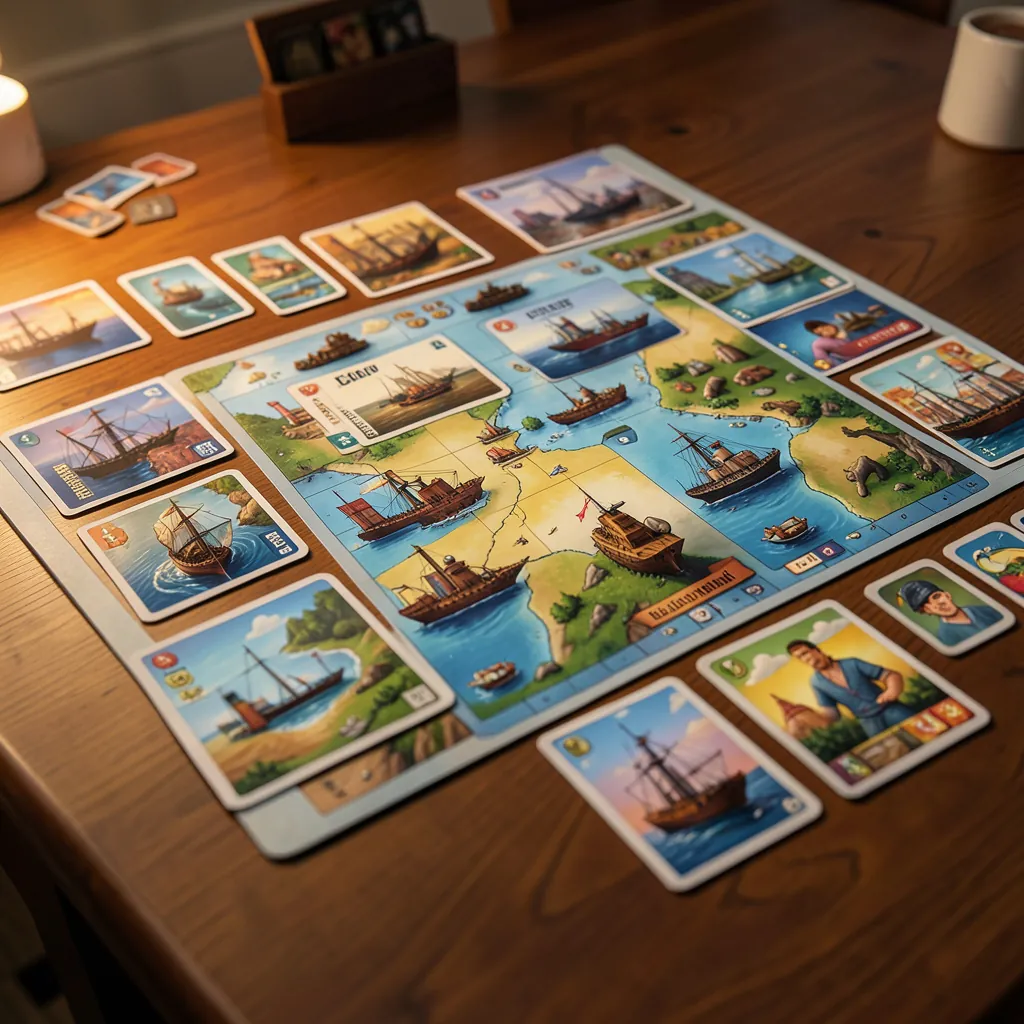
How to Play Battleship: Classic Rules, Setup, Scoring, and Edition Variations
Contents
🎲 Battleship is a two-player hidden-information board game in which each player secretly places five ships and calls coordinates to hit and sink the other fleet. The goal is simple: sink all five of your opponent’s ships before they sink yours. Classic play alternates one shot per turn, marking hits with red pegs and misses with white pegs.
Players: 2 in classic Battleship; some Electronic Battleship editions also support 1-player solo vs the computer.
Play Time: About 15–55 minutes depending on edition/objective; Pirates Command lists 15–25, 25–40, or 40–55 minutes by objective.
Age: 7+ for Grab & Go; 8+ for Pirates Command and Electronic Battleship.
Difficulty: Easy for Classic; Advanced mode adds complexity in Electronic Battleship.
Type: Hidden-information board game; card-game and electronic variants exist.
Note: The sources describe Battleship board, card, and electronic games, not a 3–5 player trick-taking game; classic Battleship is 2 players.
Setup
Conflict note: These sources are not one uniform rulebook. They describe different Battleship products with different ages, player counts, components, and win conditions. The steps below teach the standard two-player peg-and-grid game first, then call out edition-specific differences. Do not mix Pirates Command point scoring or Card Game rules into classic Battleship.
Which Battleship version are you playing?
| Edition / source | Players | Age | Main components | Objective / scoring | Key setup note |
|---|---|---|---|---|---|
| Classic / Grab & Go Battleship | 2 | 7+ | 2 battle cases, 10 ships, red and white pegs | Sink the opponent’s five ships | Separate battle cases; secretly place five ships; divide pegs |
| Electronic Battleship | 1–2 | 8+ | Four-piece folding game unit, 5 gray and 5 red combat crafts, red/white/blue pegs, labels, rubber feet, 3 AA batteries | Destroy the enemy fleet; Classic is one shot per turn; Advanced adds three attacks per turn, special weapons, and Battle Scan | Assemble unit; choose solo or 2-player, Classic or Advanced; use custom layout or one of 30 preset layouts |
| Pirates of the Caribbean Battleship Command | 2 | 8+ | Command Center, red and white pegs, 36 ship cards, labels | Score 1500 points, score 2500 points, or capture the entire fleet | Draft six ship cards with one each of numbers 1–6; place three starting ships; hide Sweet Spots |
| Battleship Card Game | Opponent-based; source frames two players | Not stated in source | 80 playing cards: 24 Coordinate cards, 52 Battle cards, 8 Reference cards | Sink all five opponent Ship cards | Each player uses Coordinate cards and a Battle deck; beginner rules remove Power cards |
Standard two-player setup
- Separate the two battle cases by sliding them apart. Each player takes one.
- Sit facing each other with the lids raised so neither player can see the other’s ocean grid.
- Each player takes a fleet of five ships: Carrier with 5 holes, Battleship with 4 holes, Destroyer with 3 holes, Submarine with 3 holes, and Patrol Boat with 2 holes.
- Secretly place all five ships on your ocean grid by pressing them into the holes. Ships may be placed vertically or horizontally, but not diagonally. Do not place any part of a ship off the grid, and do not overlap ships.
- Once the game begins, you cannot change a ship’s position.
- Divide the red and white pegs equally between players and place them in the storage areas of each battle case.
- Decide who will go first.
Edition-specific setup notes
- Electronic Battleship: Insert three AA alkaline batteries, assemble the game unit, choose solo or two-player, then choose Classic or Advanced. For layout, use Custom Ship Layout and enter each ship’s first and last coordinates, or choose one of 30 preset Automatic layouts.
- Pirates Command: Choose one of three objectives before play. The player whose birthday is closest to today is Player 1. Player 1 selects one ship card, Player 2 selects two, then players alternate selecting one card until both have six cards. Each player must have exactly one ship card of each number 1 through 6. Each player places three starting ships on the left side of the Command Center grid.
- Battleship Card Game: Each player uses Coordinate cards and a Battle deck. In the Beginner Game, remove the Power cards from the Battle decks and ignore ship powers.
How to Play
Classic Battleship core rules
- Decide who goes first. Players then alternate turns.
- On your turn, call out one shot by naming a coordinate on your target grid using a letter and number.
- If the coordinate is occupied by a ship on your opponent’s ocean grid, it is a hit. Your opponent tells you which ship you hit, such as a destroyer or patrol boat. Record the hit by placing a red peg in the corresponding hole on your target grid; your opponent places a red peg in the corresponding hole on the ship you hit.
- If the coordinate is not occupied by a ship, it is a miss. Place a white peg in the corresponding hole on your target grid so you do not call that shot again.
- When all holes in a ship have red pegs, that ship is sunk. The ship’s owner announces which ship was sunk.
- Continue alternating turns. The first player to sink all five of the opponent’s ships wins.
Edition-specific play differences
- Electronic Classic: You get one attack per turn. Choose a coordinate on the upper target grid, place a white peg, and enter the letter/number coordinate. If you hit, replace the white peg with a red peg; your opponent also places a red peg on the hit ship. Destroyed ships stay on the grid with red pegs in place. In solo play, you play against the computer.
- Electronic Advanced: For two players, Advanced mode lets players make three attacks on each turn and use special weapons and Battle Scan. Electronic versions use NATO letter codes such as A = Alpha, B = Bravo, C = Charlie, D = Delta, E = Echo, F = Foxtrot, G = Golf, H = Hotel, and I = India.
- Pirates Command: On your turn, announce the ship you are attacking with and the ship you are attacking, then call out a coordinate. If it is a hit, place a red peg; if it is a miss, place a white peg. A ship is captured when all required hits are recorded or when its green-X “Sweet Spot” is hit. Captured ships are handed over and kept as trophies; if your ship is captured, remove it and replace it if you have another ship available. Ship powers can change play.
- Battleship Card Game: The younger player goes first. On your turn, play one Battle card from your hand, either a Peg card or a Power card. Then refill your hand to five cards from your Draw pile; if your Draw pile runs out, shuffle your Discard pile to form a new Draw pile. White Peg cards search for hidden enemy ships; Red Peg cards damage revealed enemy ships. Each Ship card shows how many hits are needed to sink it. Power cards follow the text on the card. In the Beginner Game, Power cards are removed and ship powers are ignored.
Scoring
Scoring is edition-specific. Classic Battleship has no point score: the first player to sink all five of the opponent’s ships wins. Electronic Battleship also has no point score in the Classic and Advanced modes described in the sources; you win by destroying the enemy fleet, and in Classic the win comes when the fifth and last ship is sunk.
Pirates Command does use points. Before play, choose one objective: be first to score 1500 points, be first to score 2500 points, or capture the opponent’s entire fleet. Captured ship cards are kept face up as trophies because their point values matter for scoring. The winner is the first player to meet the chosen objective.
The Battleship Card Game has no point score in the source. The first player to sink all five of their opponent’s ships wins the game.
Conflict note: Do not use Pirates Command’s 1500/2500-point objectives in classic Battleship. Classic Battleship is a fleet-sinking race, not a point-scoring game.
💡 Strategy Tips
- Mark every miss with a white peg so you do not waste turns calling the same coordinate again.
- Use the ship names your opponent announces on hits to narrow down which ship you are damaging. Ship sizes are Carrier 5, Battleship 4, Destroyer 3, Submarine 3, and Patrol Boat 2.
- In Pirates Command, use ship powers and aim for Sweet Spots. Hitting a green-X Sweet Spot immediately captures the ship regardless of other hits or misses on it.
- In the Battleship Card Game, be aware of the powers of all revealed ships, both yours and your opponent’s. Consider playing a Power card early to play more cards or draw more cards, and remember that the 4-peg card can immediately sink any ship except the Arsenal Centre.
- In Electronic Advanced, use Battle Scan and special weapons. Advanced mode gives you three attacks per turn, so plan how to use multiple shots efficiently.
Common beginner mistakes: placing ships diagonally or partly off the grid, changing ship positions after play begins, forgetting to announce which ship was hit or sunk, and mixing rules from different Battleship editions.
🎲 Variations
- Standard 2-player classic Battleship: Use two battle cases or grids, five ships per player, red hit pegs, and white miss pegs. Alternate one shot per turn and sink all five enemy ships.
- Solo play: Electronic Battleship supports a one-player Classic game against the computer. The classic peg-and-grid Battleship sources describe a two-player game.
- Electronic Advanced: Two players use three attacks per turn, special weapons, and Battle Scan. This is more complex than the Classic mode.
- Pirates Command: Two players draft six ship cards, place three starting ships, use ship powers, and play to one of three objectives: 1500 points, 2500 points, or full fleet capture.
- Battleship Card Game: Play Battle cards from hand, use White Peg cards to search for hidden ships and Red Peg cards to damage revealed ships. Beginner rules remove Power cards and ignore ship powers.
- Player-count note: The sources do not provide an official 3–5 player classic Battleship variant. Classic Battleship is 2 players; Electronic Battleship supports 1–2 players. A 3–5 player version would require a house rule or a different edition not described here.
❓ FAQ
How many players can play Battleship?
Classic Battleship is a 2-player game. Electronic Battleship editions in the sources support 1 or 2 players, with solo play against the computer. Pirates Command and the Card Game are opponent-based two-player games. The sources do not list an official 3–5 player classic version.
How do you win Battleship?
In classic Battleship, you win by sinking all five of your opponent’s ships first. In Pirates Command, you win by meeting the chosen objective: 1500 points, 2500 points, or capturing the entire fleet. In the Card Game, you win by sinking all five opponent Ship cards.
Can you play Battleship with 2 players?
Yes. Two players is the standard classic Battleship count. Each player takes a battle case or grid, secretly places five ships, and alternates one shot per turn.
Is Battleship hard to learn?
No. Classic Battleship is easy: call a coordinate, mark hit or miss, and sink all five ships. Electronic Advanced mode and Pirates Command add more rules such as special weapons, Battle Scan, ship powers, and point objectives.
How long does a Battleship game take?
Classic Grab & Go does not state a fixed play time in the source. Pirates Command gives 15–25 minutes for 1500 points, 25–40 minutes for 2500 points, and 40–55 minutes to capture the entire fleet. Electronic Battleship sources do not list a fixed time.
What do you need to play Battleship?
For classic or Grab & Go Battleship, you need two battle cases, 10 ships total, red hit pegs, and white miss pegs. Electronic Battleship needs the game unit, combat crafts, pegs, and three AA alkaline batteries. Pirates Command uses a Command Center, pegs, and 36 ship cards; the Card Game uses 80 playing cards.
Related guides
- Backgammon Direction of Play: Complete How-to-Play Guide
- How to Play Backgammon: Complete Rules, Setup & Strategy Guide
- backgammon how to
- How to Play Backgammon: Complete Rules, Setup, Scoring, and Strategy
- How to Play Basic Checkers (Draughts): Rules, Setup, Strategy and Variations