How to Play Battleship: Setup, Rules, Scoring, and Variations
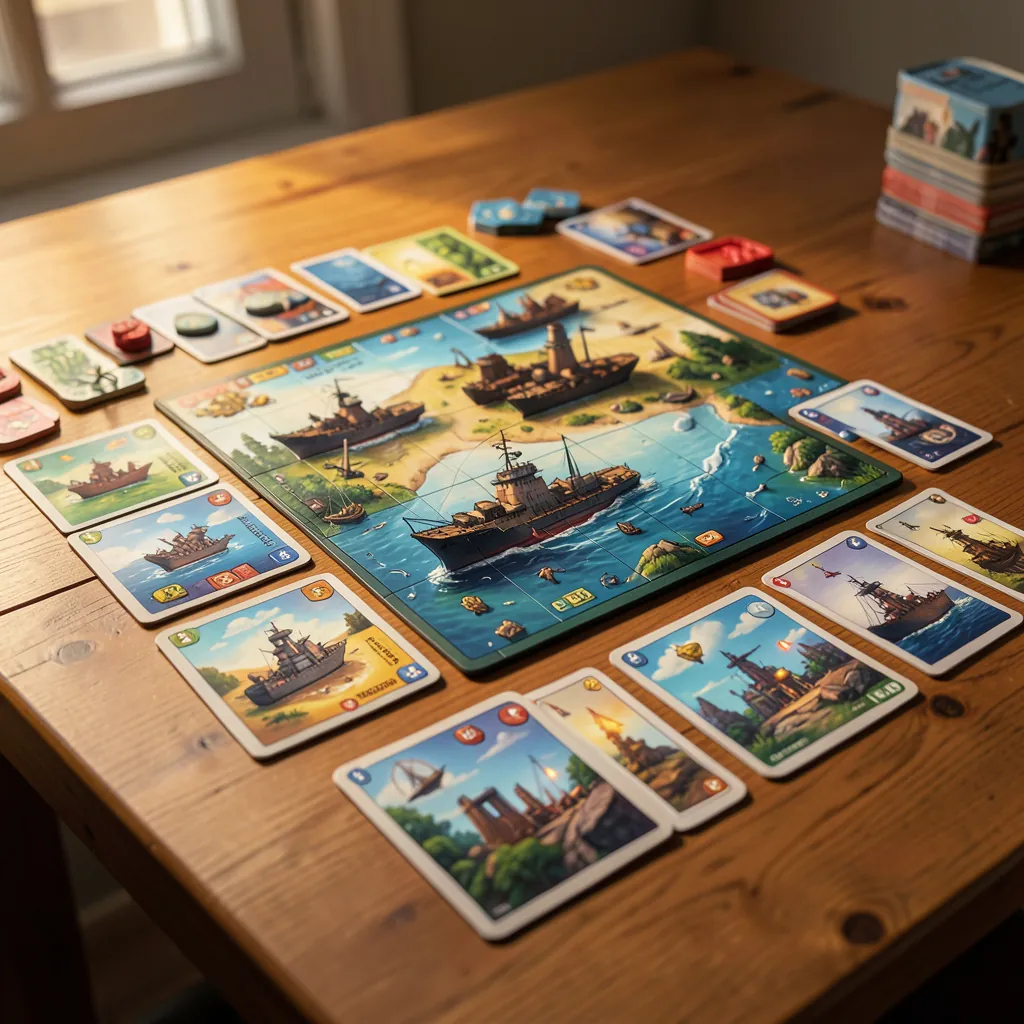
How to Play Battleship: Setup, Rules, Scoring, and Variations
Contents
🎲 Battleship is a two-player naval combat board game in which each player secretly places a fleet on a 10×10 grid and then takes turns calling coordinates to find and sink the opponent’s ships. The goal is simple: be the first to sink all of your opponent’s ships. Players answer each shot with “Hit!” or “Miss,” and a ship sinks when every cell it occupies has been hit.
Players: 2 (classic tabletop); some digital editions list 1–2 with an AI opponent
Play Time: Not specified in the provided sources; varies by edition and play style
Age: Not specified in the provided sources for classic tabletop; check your edition or ESRB rating for digital versions
Difficulty: Easy to learn (deduction-based)
Type: Two-player naval combat/guessing board game
Rule conflicts to flag: Classic Battleship is a two-player game; the Nintendo Switch digital edition lists 1–2 players because it includes an AI opponent. Ship rosters also vary: Source 1’s example table shows five ships with lengths from 1 to 5 cells, Source 2 says ship lengths vary from 2 to 5 squares, and Source 4 lists a common 5-ship roster of carrier 5, battleship 4, cruiser/destroyer 3, submarine 3 or 2, and patrol boat 2. Use your edition’s roster.
Setup
- Each player takes one 10×10 fleet grid and one separate 10×10 tracking grid. Source 1 says each player uses a 10×10 board and creates another board of the same size to record torpedoes.
- Secretly place your fleet on your own fleet grid. Ships must be placed horizontally or vertically and must occupy consecutive cells. Keep their locations hidden.
- Use the ship roster printed in your edition. A common classic roster from Source 4 is: Aircraft Carrier (5 cells), Battleship (4 cells), Cruiser or Destroyer (3 cells), Submarine (3 or 2 cells), and Patrol Boat (2 cells).
- Do not reveal your ship locations. Use your tracking grid to mark the coordinates you fire at and whether each result is a hit or miss.
- After both players have placed their fleets, begin the turn sequence. The provided sources do not mandate a specific first-player method.
How to Play
- Secretly deploy your fleet on your own 10×10 grid. Place ships horizontally or vertically in consecutive cells; do not show your opponent.
- On your turn, call out one coordinate on the opponent’s grid, such as “B5.” This is the coordinate you are shooting at.
- The opponent checks that coordinate and truthfully answers “Hit!” if it contains part of a ship or “Miss!” if it is empty.
- Both players record the shot and result. The shooter tracks hits and misses on the enemy grid; the defender records the incoming attack.
- When all cells occupied by one ship have been hit, that ship is sunk. The ship’s owner announces it, such as “You sank my battleship!” or “This ship was sunk.”
- Players alternate turns, repeating coordinate calls and hit/miss reports until one fleet is destroyed.
- The game ends when all of one player’s ships have been sunk. The other player wins.
Which Battleship rules differ by source or edition?
| Rule element | Classic tabletop rules (Sources 1, 2, 4) | Digital/edition notes (Sources 3, 5) |
|---|---|---|
| Players | 2 players (Sources 1, 4). | Nintendo Switch edition lists 1–2 players (Source 5); mobile offers AI, online, and friends modes (Source 3). |
| Board | Each player has a 10×10 grid (Sources 1, 4). | Same coordinate-calling core in digital adaptations (Sources 3, 5); one 12×12 variant is noted in Source 4. |
| Fleet | 5 ships placed horizontally or vertically in consecutive cells (Source 1). Roster conflict: Source 1’s example shows lengths from 1 to 5 cells; Source 2 says ships vary from 2 to 5 squares; Source 4 lists carrier 5, battleship 4, cruiser/destroyer 3, submarine 3 or 2, patrol boat 2. | Commanders Mode adds unique commander abilities and ship shapes (Sources 3, 5). |
| Turn action | Call a coordinate; opponent says “Hit!” or “Miss!” (Sources 1, 3, 4). | Same core in digital versions (Sources 3, 5). |
| Sinking | When all cells of a ship are hit, it sinks and the owner announces it (Sources 1, 3, 4). | Same core logic described by digital editions (Sources 3, 5). |
| Winning | First to sink all opponent ships wins (Sources 1, 3, 4). | Digital editions add medals/missions, but the core goal remains sinking the fleet first (Sources 3, 5). |
Scoring
Classic Battleship does not use a point score. A hit is information, and a sunk ship is progress toward victory; the sources do not assign points for hits or sunk ships. The first player to sink every ship in the opponent’s fleet wins immediately (Sources 1, 3, 4). In digital editions, medals and missions are extra rewards and do not change the classic win condition unless a special mode says otherwise (Sources 3, 5).
💡 Strategy Tips
- Keep a clean tracking grid. Mark every hit and miss, and avoid calling the same coordinate twice; the rules require both players to record shots.
- Use a systematic search pattern to cover open water instead of firing randomly. This helps you gather information efficiently.
- After a hit, target adjacent horizontal or vertical cells to finish the ship, because ships occupy consecutive cells in a straight line.
- Treat every “Miss” as useful information: it eliminates a cell and helps narrow where the remaining ships can fit.
- Common beginner mistakes: forgetting to record shots, revealing ship locations, and failing to announce when a ship has been sunk.
🎲 Variations
- Classic 2-player tabletop: Use the standard rules above. The sources describe Battleship as a two-player game; no 3–5-player tabletop variant is supported by the provided sources.
- One-player digital play: Digital versions offer AI opponents, so a single player can play against the computer (Sources 3, 5).
- Commanders Mode: Digital editions add commanders with unique abilities: William Karslake can order an Airstrike, Johannes Schmidt launches a Torpedo, and Giuseppe Ferrara can unleash a Bombardment (Sources 3, 5).
- Salvo variant: Source 4 notes a “Salvo” mode where a player fires a number of shots equal to the number of ships they have remaining each turn.
- 12×12 edition variant: Source 4 describes an OurGame version with a 12×12 board, a different fleet, special placement restrictions, and three shots per turn.
❓ FAQ
How many players can play Battleship?
Classic tabletop Battleship is a 2-player game. Some digital editions list 1–2 players because they include an AI or computer opponent; the provided sources do not support a 3–5-player tabletop version.
How do you win Battleship?
You win by sinking all of your opponent’s ships before they sink all of yours. Classic Battleship does not use a point total; the first fleet destroyed decides the game.
Can you play Battleship with 2 players?
Yes. Two players is the classic Battleship format: each player has a hidden fleet and a tracking grid, and players alternate calling coordinates.
Is Battleship hard to learn?
No. The core rules are easy to learn: call a coordinate, hear “Hit!” or “Miss,” mark the result, and sink every enemy ship. The challenge comes from deduction and tracking.
How long does a game take?
The provided sources do not state a fixed play time. Game length varies by edition and by how quickly players find and sink each other’s ships.
What do you need to play Battleship?
For classic tabletop play, you need two players, two 10×10 grids per player (a fleet grid and a tracking grid), a fleet of ships for each player, and a way to mark hits and misses. Digital versions require the app or game and, for online play, an internet connection.
Related guides
- Backgammon Direction of Play: Complete How-to-Play Guide
- How to Play Backgammon: Complete Rules, Setup & Strategy Guide
- backgammon how to
- How to Play Backgammon: Complete Rules, Setup, Scoring, and Strategy
- How to Play Basic Checkers (Draughts): Rules, Setup, Strategy and Variations