How to Play Battleship: Rules, Setup, Scoring, and Best Strategy
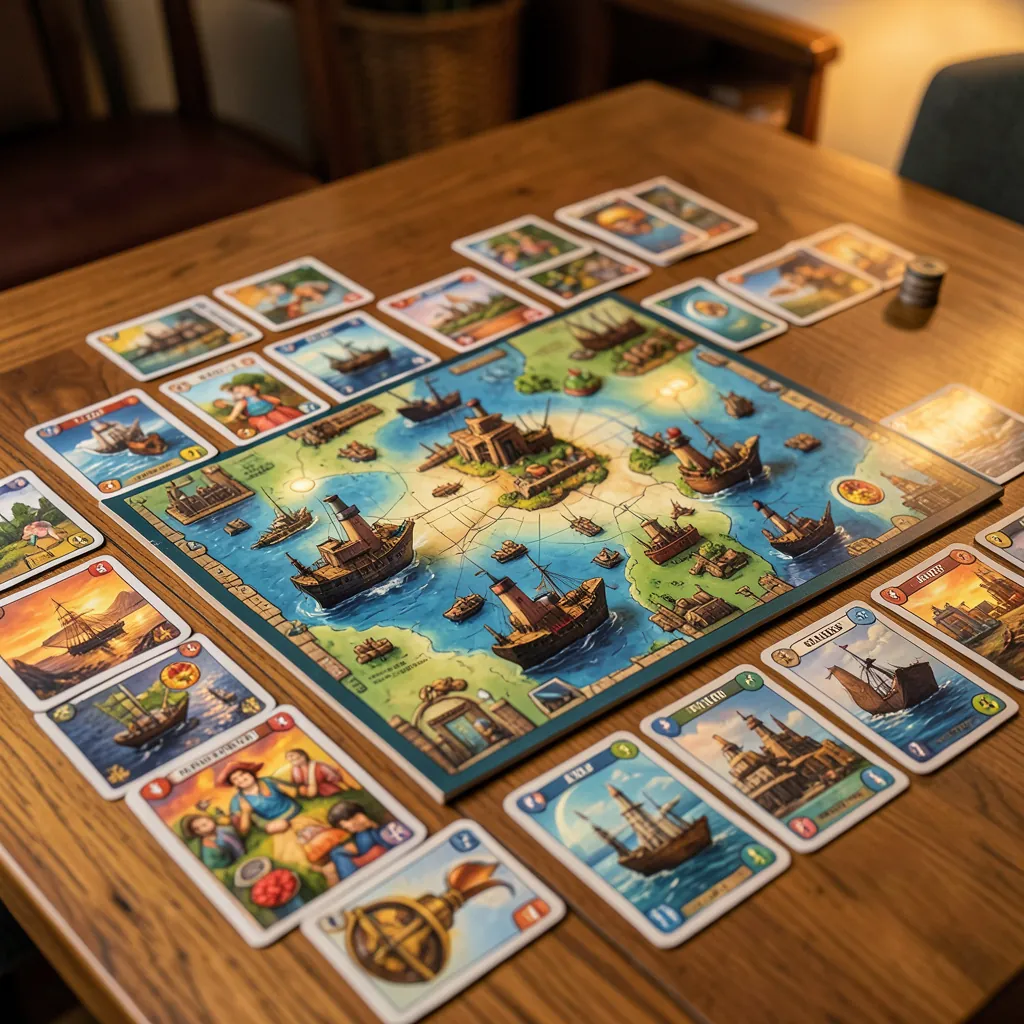
How to Play Battleship: Rules, Setup, Scoring, and Best Strategy
Contents
🎲 Battleship is a two-player hidden-information board game in which each player secretly places a fleet of five ships on a 10×10 grid and takes turns calling coordinates to find and sink the opponent’s ships. The first player to sink the entire enemy fleet wins. It looks like luck, but hunt/target search, parity patterns, and smart ship placement measurably reduce the number of shots you need.
Players: 2
Play Time: Not specified in the sources; simulations report about 44–95 shots per game depending on strategy
Age: Not specified in the sources; Source 6 notes Battleship is often associated with children’s board games
Difficulty: Easy to learn; deeper strategy in searching and placement
Type: Two-player hidden-information board game
Setup
- Each player takes a 10×10 grid with lettered and numbered edges. Keep your grid hidden from your opponent. Source 3 describes this as the classic setup.
- Place the standard five-ship fleet on your grid. Source 3 lists these ship lengths:
| Ship | Length |
|---|---|
| Carrier | 5 cells |
| Battleship | 4 cells |
| Cruiser | 3 cells |
| Submarine | 3 cells |
| Destroyer | 2 cells |
That is 17 occupied cells out of 100. Ships sit horizontally or vertically, never diagonally, and cannot overlap or hang off the edge of the grid.
- Touching rule conflict: Source 5’s main “standard rules” simulations allow ships to touch. Source 5’s “Iron Tide” variant says ships never touch. Source 1 discusses spaced vs. grouped placement as strategic choices. Agree on this before play or follow your rulebook.
- Digital versions may offer Rotate and Auto-Place buttons. Source 3 describes Auto-Place as legally scattering the whole fleet in one click.
- Fleet terminology conflict: Source 1 refers to a “sub” as the smallest ship and mentions a “single.” Sources 3–5 use the classic fleet above, where the 2-cell Destroyer is the smallest ship. Use the fleet named in your specific ruleset.
How to Play
- After both fleets are placed and hidden, agree who fires first. The sources do not specify a required first-player method, but they do say players take turns.
- On a turn under standard rules, call one coordinate on your opponent’s grid, such as B4. Source 3 says one coordinate per turn; Source 6 says each turn a player fires a salvo at one cell. In the Iron Tide variant, a hit lets you fire again and a miss ends your turn (Source 5).
- Your opponent answers with miss, hit, or hit and sunk (Source 6). Mark each result on your tracking grid so you can track hits and misses (Source 3).
- While you have no unresolved hits, you are in Hunt mode: spread shots to find a ship. Once you land a hit, switch to Target mode.
- In Target mode, fire at the four cells directly above, below, left, and right of the hit until you get a second hit. Once you have two hits in a line, you know the ship’s axis; keep firing along that straight line in both directions until the ship sinks. The game tells you when a vessel is sunk, which is the signal to return to Hunt mode.
- Do not drift back to random hunting while a wounded ship is still afloat. A ship you have already hit once is the cheapest kill on the board; finish it before searching for a new target.
- Continue until one player’s entire fleet is sunk. The first player to sink all five enemy ships wins (Source 3; Source 6).
Scoring
Standard Battleship has no point total. The win condition is binary: sink all five of your opponent’s ships before they sink yours. Source 3 says the first player to sink all enemy ships wins; Source 6 says the goal is to sink all opposing ships while keeping your own afloat.
If you want to measure performance, Source 5 notes that digital versions may show shots fired, hits, accuracy, surviving ships, and best result. Fewer shots and higher accuracy are better. In Source 5’s 65,000-game simulation, probability targeting averaged 44.5 shots, checkerboard hunt-and-target averaged 55.3, hunt-and-target averaged 62.4, and random firing averaged 95.4.
💡 Strategy Tips
What is the best Battleship search strategy?
The strongest approach combines hunt/target, checkerboard parity, and probability targeting. Sources 4 and 5 ran simulations with different models, so compare within each column rather than across columns.
| Strategy | Source 5 average shots (65,000 sims, standard rules) | Source 4 average moves per game (Berry simulations) | What it means |
|---|---|---|---|
| Random firing | 95.4 | Not reported | Baseline; worst |
| Hunt and target | 62.4 | 66 | Switch to targeting after a hit |
| Checkerboard/parity hunt + target | 55.3 | 65 | Fire only one checkerboard color while hunting |
| Probability targeting | 44.5 | 44 | Aim at squares with the most possible remaining ship placements |
Conflict note: Source 4 reports 66 / 65 / 44 moves for hunt-target / parity / probability, while Source 5 reports 62.4 / 55.3 / 44.5 shots. The exact averages differ because the simulations and rulesets differ, but the ranking is consistent: random is worst, hunt/target is better, and parity or probability search is best.
1. Hunt first, then target
While no ship is wounded, spread shots to find any ship. The moment you hit, stop hunting and fire at the four adjacent cells until you get a second hit. Then fire along the known line until the ship sinks. The common beginner mistake is returning to random shots while a damaged ship is still floating.
2. Use a checkerboard hunt
The smallest standard ship is 2 cells long, so every ship must touch at least one square of each checkerboard color. During Hunt mode, fire only at one color. That searches half the grid while still guaranteeing you will eventually touch every ship. Once the 2-cell Destroyer is sunk, the smallest remaining ship is 3 cells long, so you can widen the pattern to every third square along each diagonal (Sources 3 and 5).
3. Think in probabilities and open channels
Source 5’s strongest simulated method asks: “How many ways could the remaining ships still fit across this square?” Early in the game, the center of the board is more likely to hold a ship than the corners. Shoot into the biggest unexplored gap, not next to old misses, and check whether the remaining ships can even fit in a gap before spending a shot. Source 1’s “intersecting channels” idea is compatible: once misses accumulate, look for clear intersecting channels long enough to hide the largest remaining ship.
4. Place ships unpredictably and mostly spread out
Source 5 advises: do not make a pattern, spread ships out, mix orientations, and protect the 2-cell ship. Do not hide the Destroyer in a corner where many players check first. Source 1 adds that random placement is harder to detect than a regular pattern, and that edge/corner placements can become easy to anticipate.
Placement conflict note: Source 1 discusses “grouped” placement—putting ships adjacent so a hit on one may mislead the opponent. Source 5 also notes that two ships placed end to end can look like one long ship. But Sources 3 and 5 generally recommend spreading ships apart so one lucky hit does not lead the opponent straight into a second ship. Treat touching as a gamble, not a default.
5. Change your opening and placement against repeat opponents
Source 1 warns that repeating an opening salvo or strategy against the same opponent will be anticipated and defeated. A repeat opponent may interpret your attack strategy as a clue to your placement strategy, so change your placement while still using a strong search method.
🎲 Variations
- Two-player standard: This is the default. Each player has one hidden 10×10 grid and one five-ship fleet. No special 2-player variant is needed; Battleship is described as a 2-player game in Source 6.
- Ships may touch vs. ships never touch: Source 5’s main standard-rule simulations allow touching. Its Iron Tide variant says ships never touch. Check your rulebook before setup.
- Iron Tide rules: Source 5 describes a variant where ships never touch, the water around a sunk ship is marked for you, and a hit lets you fire again. A miss ends your turn. Tactical abilities also end your turn. In this variant, finishing a damaged ship is especially valuable because hits keep your turn going.
- Digital Auto-Place: Source 3 describes browser versions where you can rotate ships or use Auto-Place to scatter the fleet legally in one click.
- Fleet terminology variants: Source 1 mentions a “sub” as the smallest ship and a “single,” while the classic fleet in Sources 3–5 uses a 2-cell Destroyer as the smallest ship. If your version uses different ship names or lengths, follow that version’s rulebook.
- More than 2 players: The sources only describe two-player Battleship. They do not provide official 3–5 player rules.
❓ FAQ
How many players can play Battleship?
Two. Source 6 explicitly calls Battleship a 2-player game, and Sources 3 and 4 describe two opposing grids. The sources do not provide official rules for 3–5 players.
How do you win Battleship?
Sink all five of your opponent’s ships before they sink yours. Standard Battleship has no point total; the win is binary. Digital versions may also show shots, hits, accuracy, and surviving ships as performance stats.
Can you play Battleship with 2 players?
Yes—2 players is the standard setup. Each player has a hidden 10×10 grid and a five-ship fleet. Digital versions may offer computer opponents or Auto-Place, but the core game is two opposing players.
Is Battleship hard to learn?
No. The rules are simple: place ships, call coordinates, mark hits and misses, and sink all enemy ships. The strategy is deeper: hunt/target search, checkerboard parity, and probability targeting. Source 6 notes that simple strategies can dominate a randomly playing opponent.
How long does a game take?
The sources do not report a clock time. They report shot counts: in Source 5’s standard-rule simulations, random firing averaged 95.4 shots, hunt/target 62.4, checkerboard 55.3, and probability targeting 44.5. Actual play time depends on how quickly players fire and mark results.
What do you need to play Battleship?
Two 10×10 grids, five ships per player with lengths 5, 4, 3, 3, and 2, and markers or a digital version. Ships are horizontal or vertical, never diagonal, and cannot overlap or hang off the grid (Source 3). Check your rulebook for whether ships may touch.
Related guides
- Backgammon Direction of Play: Complete How-to-Play Guide
- How to Play Backgammon: Complete Rules, Setup & Strategy Guide
- backgammon how to
- How to Play Backgammon: Complete Rules, Setup, Scoring, and Strategy
- How to Play Basic Checkers (Draughts): Rules, Setup, Strategy and Variations